
Web Development
Web development provides many advantages for individuals and companies. A well-organized and professionally crafted website not only establishes a strong online reputation but also establishes the credibility of a company, increases user interaction, and generates appropriate leads. Businesses can expand their reach into many platforms by combining features such as social media, search engines, and customer portals, making products and services reach the appropriate audience. Scalable and economical, web development functions as a 24/7 online storefront, providing opportunities for companies to attract, convert, and hold customers with increased efficiency and comfort.
Importance of Website Development
Website development provides many advantages for individuals and for organisations. Beyond creating a strong online reputation, a well-administered and professionally crafted website also generates the credibility for an organisation, generates user action, and generates appropriate leads. Organizations can expand their reach into many platforms by including features such as social media platforms, search engines, and customer portals, getting the product and the service reach the appropriate audience. Scalable and affordable, website development functions as a 24/7 online storefront, providing possibilities for organisations to attract, convert, and retain customers with increased efficiency and convenience.
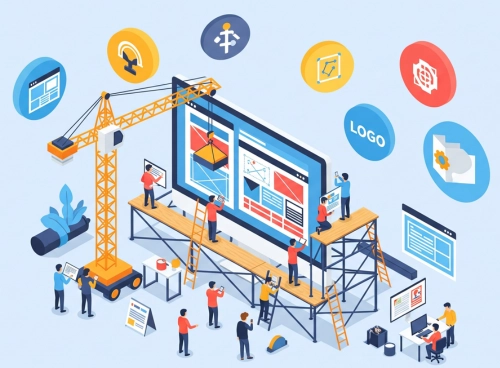
Web Development: Building Your Digital Presence
Introduction to Website Development
Website development becomes effective for the corporations as well as for the individuals with the advent of the digital age. Developing and maintaining the websites as appropriate for the company’s aim and necessity constitutes what the term web development signifies. This involves a suite of features including responsive structure, user-friendly navigation, code-compatible for SEO, speed-enhancement, and seamless integration. Well-crafted website development not only involves the potential customers but also elevates the recognition of the company’s brand name, raises the level of user interaction, and creates high conversion.
The Importance of Website
Web development aapke business ke liye target audience ko attract aur retain karne mein ek important role play karta hai. Ek well-planned, user-friendly aur visually engaging website strong first impression create karti hai aur visitors ko aapke brand se connect hone ke liye encourage karti hai. Yeh aapke business ke liye trust aur credibility build karne mein madad karti hai, chahe woh desktop ho ya mobile platforms.
Ek effective web development strategy customer experience ko enhance karti hai by offering fast-loading pages, clear navigation, relevant content placement, aur intuitive design. Iske saath hi, ek professionally developed website better search engine rankings aur online visibility ko support karti hai, kyunki search engines unhi businesses ko prefer karte hain jin ki websites active, well-structured aur user-focused hoti hain.
Key Elements of Effective Web Development
1. Website Architecture & Content Strategy:
Content aur site structure web development ki backbone hoti hai. A well-structured website ensures ki pages informative, engaging aur brand goals ke saath aligned rahen. Ye SEO aur user experience dono improve karta hai.
2. Visual Design & Branding (Colors & Layout):
Website ka look & feel direct impact daalta hai user perception par. Consistent colors, themes aur layouts brand trust, recognizability aur emotional connection build karte hain.
3. Typography & Messaging:
Fonts, text style aur tone directly readability aur brand personality ko reflect karte hain. Clear aur consistent messaging website ko professional, user-friendly aur conversion-focused banata hai.
4. Media Integration (Images, Videos & Graphics):
High-quality images, videos aur animations website ko engaging aur visually appealing banate hain. Ye user attention retain karte hain aur storytelling ko enhance karte hain.
5. Layout & Spacing (Digital Whitespace):
Design mein proper whitespace aur smart placement of elements clutter ko avoid karte hain. Strategic spacing se users easily core content and CTAs (Call-to-Actions) par focus karte hain.
6. User Journey & Navigation:
Seamless navigation aur intuitive menus ensure karte hain ki users easily information find karein. Proper user flows aur optimized landing pages visitors ko awareness se action tak smoothly guide karte hain.
7. Calls to Action (CTAs):
Well-designed aur strategically placed CTAs (like Buy Now, Contact Us, Sign Up) maximum conversions laate hain. Inka clear design aur positioning lead generation aur sales dono improve karte hain.
8. Cross-Device Responsiveness:
Aaj ke time mein majority traffic mobile devices se aata hai, isliye website ka responsive design essential hai. Multi-device optimized websites har screen size pe consistent aur smooth experience deti hain.
Choosing the Right Web Development Solutions
These are clean web-development-based redrafts of your paragraph:
- Choosing the right web development stack matters when trying to accomplish business goals. Think of target users, budget line allocations, project goals, scalability, and the necessity for integrating systems.
- Common development methodologies for the web include traditional CMS, headless CMS, custom frames, as well as eCommerce platforms with strengths in speed, flexibility, security, and maintainability.
- Compare solutions against performance, SEO readiness, usability, developer productivity, ecosystem maturity, and cumulative cost of ownership and make a decision which yields maximum ROI.
Planning and Organizing Website Launches
To execute a web development project, planning and organizing the manner the approach would be taken comes first. Identify key user personas, declare definitive technology and business objectives, and identify the desired stack and architecture (such as traditional CMS, headless CMS, custom framework, or eCommerce platform). Develop information architecture, design system, and content strategy suitable for your objectives. Make the website interactive, performance-engineered, accessible, SEO-friendliness-enhanced, and analytics-driven as a means of maximizing reach, usability, and conversion.
Seamless On‑Site Customer Journey
Ensuring a seamless website experience is critical when steering visitors through each stage—all the way from landing through conversion. Make communication simple, goal-brief with the page content and UI, so each screen naturally nudges the user into the next one by natural nav and strategic CTAs. Make relevant content, product detail, and promotions easily discoverable with well-structured menus, internal links, and context-aware features. Apply session-aware features (like saved carts, previously visited products, and personal recommendations) to snap users back into action. Ensure consistent-looking design, typography, and interaction behavior for all pages and devices for a seamless, credible, and compelling on-site experience.
Impactful Visual Design & Consistent Website Branding
Visual design lies at the core of defining a strong and recognizable web brand presence. Proper application of color systems, typography scales, and creative UI elements in pages and components enables engagement with the relevant users and evokes the desired emotions. Consistency of visual patterns—design system tokens, components, imagery style, and interactions—through the entire website and web applications enhances brand recognition, builds credibility, and creates a lasting impression on users.
Responsive Experiences on Every Device
With growing smartphone and tablet popularity, designing entirely mobile-optimized websites is needed. Responsive development ensures that designs, features, and content resize automatically with all screen sizes and devices. It not only enhances user experience but also increases engagement, improves conversions, and enables improved search engine rankings through quality performance and mobile-surfable design.
Search Engine Optimization (SEO) in Web Development
Successful SEO use when developing a website holds the key to sustainable increases in rank and organic traffic. Begin with solid keyword research as the starting point for your site architecture, content tree, and component content. Make the tech attributes—clean, semantic HTML; descriptive title and description meta tag; well-organized heading structure; keyword‑friendly, readable URLs; and well‑organized on-page content—better for crawlability and search relevance. Emphasize top‑shelf, user‑enjoying content models (product pages, blogs, knowledge base) benefiting from natural backlinks and cementing topical authority. Make the site tech‑ready for fast page render times, Core Web Vitals optimization, mobile‑friendly renderings, accessible patterns, XML sitemaps, and proper indexing controls (canonical tags, robots.txt). Regular monitoring, analysis, and iteration against analytics and search console data for template improvement, internal links, and performace—leaving the competition behind and wringing maximum ROI.
Performance Optimization for Increased Web Conversions
Website speed and responsiveness matter a lot for user experience as well as crawlability by the search engines. Optimize by compressing and adequately sizing your images, minifying and bundling your CSS/JavaScript files, by employing HTTP/2 or HTTP/3, and by enabling the browser as well as server caching (long‑lived cache headers and versioned resources). Utilize a good config hosting with a CDN for latency reducing as well as a minimum time‑to‑first‑byte. Utilize lazy loading, preloading critical resources, as well as deferring un‑important scripts for quick rendering. Do a regular test for the Core Web Vitals as well as a performance audit, making the suitable tweaks at the suitable time for a consistent, seamless browsing experience by all devices.
Leveraging UI/UX for Higher On‑Site Engagement
Integrating social features into the website is a good way of increasing interaction on the site, exposing the brand, and generating loyalty. Make page and post sharing easy through the use of social sharing buttons. Make it easy for users by adding social sharing buttons. Incorporate live social feeds or prominent links to the official profiles for cross-platform connectivity. Employ social widgets (reviews, galleries of user-generated content, embedded posts) for the presentation of real-time activities and the general enhancing of the web presence.
Security-First Web Development for Brand Trust
In website development, security goes beyond the protection of information—it involves the establishment of confidence and credibility with each user. A secure website tells visitors user information is protected, affecting lead generation and conversion. Install HTTPS with proper SSL/TLS certificates to encrypt data during transmission and boost customer confidence. Update the CMS, framework, plugins, and external dependencies regularly to get rid of vulnerabilities. Mandate strong, one‑time‑use passwords and multi‑factor authentication for all administrator access. Have automated, versioned backups and practiced restore processes in place to avoid data loss and reduce downtime.
Guard the stack with security headers, least‑privileged access, up‑to‑date patching, and monitoring for suspicious behavior. Good security makes it possible for good search performance since fast, safe, and reliable sites perform well with search engines—and security is a cornerstone of solid development and long‑term success.
Measuring and Analyzing Web Performance
Data-driven refinements and result-based decision making by employing website analytics. Make use of user behavior, traffic sources, top-performing funnel and top-converting page monitoring by employing monitoring as well as analytics tools. Monitor key metrics such as page views, sessions, bounce rate, time spent upon page, scroll depth, form submission, add‑to‑cart, completion of checkout, as well as total conversion rate. Monitor the technical KPI such as Core Web Vitals (LCP, INP, CLS), error rates, uptime, as well as page load time for stability as well as speed. Analysis brings strengths, bottlenecks, as well as opportunities—all facilitating regular UX, content, SEO, as well as performance refinements for maximum impact.
Common Website Design and UX Mistakes to Avoid
- Overstuffing pages with gratuitous or extraneous UI elements which serve to pull users away from rather than toward desired actions.
- With incongruent color schemes or inconsistent trends for images (components, icons, images) which dilute the brand character and erode confidence.
- Not taking care for mobile and tablet responsive design, i.e., developing broken layouts, unusable controls, and terrible mobile UX for landing pages.
- Overlooking the foundation technical SEO (semantic HTML, correct heading, concise URLs, metadata, schema) creating crawlability and rank problems.
- Not up-grading the tech stack, CMS, plugins, and dependencies periodically, which causes bottlenecks for the app’s performance as well as creates security holes.
- Not compressing media files (images, videos, SVGs) optimally by the correct formats, compression, and lazy loading—and hence slow pages and high bounce rates.
- Lack of research into the user, analytics, and A/B testing for layouts and CTAs, thus creating friction-filled flows and slow-converting rates.